One of the clearest trends emerging in today’s housing market is the growing demand for more full bathrooms. According to new data from the Census Bureau analyzed by the National Association of Home Builders, buyers across the country are prioritizing function, privacy, and wellness in the way they want their homes designed. And bathrooms, particularly full bathrooms, have become one of the most powerful value drivers in the modern home.
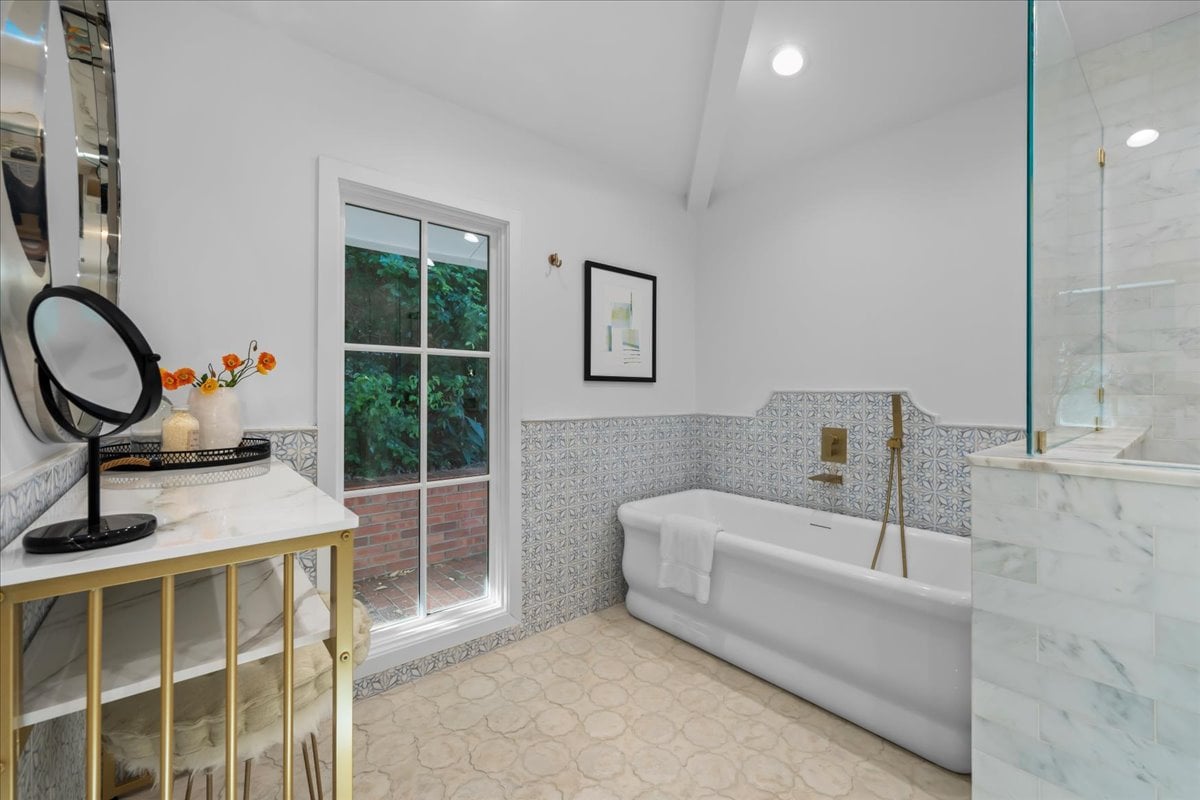
In 2023 and 2024, sixty five percent of new single family homes nationwide were built with two full bathrooms, marking the second year of steady growth and landing just shy of the all time high set in 2005. A full bathroom is defined as a space with a washbasin, a toilet, and either a bathtub, a shower, or a combination of the two. As lifestyle expectations evolve, these full bathrooms have become non negotiable amenities for families, multigenerational households, and remote workers alike.
While two bathroom homes dominate new construction, the next most common layout is three full bathrooms, which underscores a growing preference for homes that can accommodate multiple users at once. Here is how bathroom configuration trends have shifted across recent years:
Number of bathrooms
2019: 1 or less 3.5 percent, 2 baths 64.1 percent, 3 baths 24.7 percent, 4 or more baths 7.6 percent
2020: 1 or less 2.9 percent, 2 baths 65.1 percent, 3 baths 25.3 percent, 4 or more baths 6.7 percent
2021: 1 or less 3.1 percent, 2 baths 62.6 percent, 3 baths 27 percent, 4 or more baths 7.3 percent
2022: 1 or less 4.4 percent, 2 baths 62.3 percent, 3 baths 25.8 percent, 4 or more baths 7.5 percent
2023: 1 or less 4.6 percent, 2 baths 64.7 percent, 3 baths 23.8 percent, 4 or more baths 6.9 percent
2024: 1 or less 4.5 percent, 2 baths 65 percent, 3 baths 23.2 percent, 4 or more baths 7.2 percent
Even though the national average points strongly to two full bathrooms as the dominant layout, the demand is not evenly distributed across the country. Some regions show an extremely strong preference for two full baths. In areas such as Mississippi, Alabama, Tennessee, and Kentucky, more than seventy one percent of new homes include exactly two full bathrooms. Midwestern states including Wisconsin, Illinois, Indiana, Michigan, and Ohio follow closely at sixty eight point nine percent.
On the opposite end of the spectrum, new home construction in New York, New Jersey, and Pennsylvania reflects a very different demand profile. These states have the lowest share of two bathroom homes and the highest proportion of single family homes with four or more full bathrooms. More than twenty percent of new homes there include four full bathrooms, more than double the percentage in any other region.
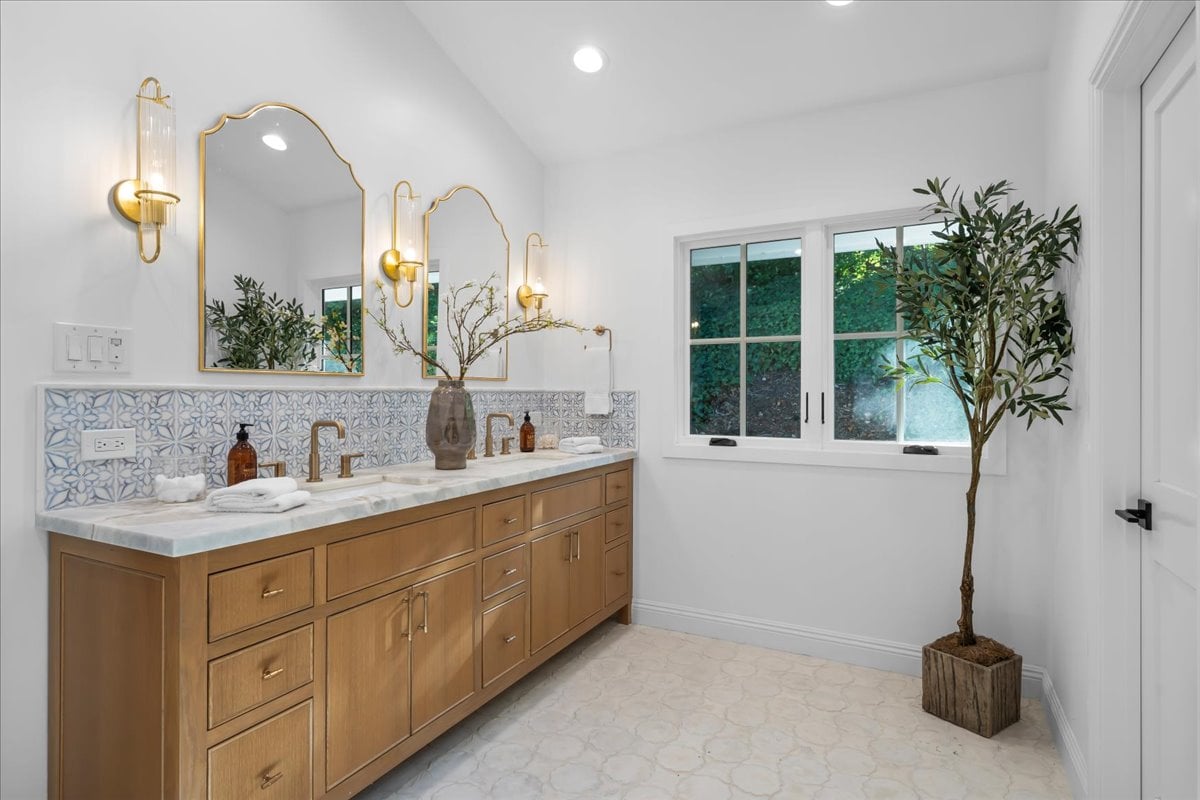
Why Powder Rooms Are Losing Favor
At the same time buyers want more full bathrooms, they are showing declining interest in half bathrooms. More than half of new single family homes built in 2024 had no half bath at all. Only a small percentage of homes nationwide included a layout with two or more half baths.
New England stands out as the regional exception. Sixty four percent of new homes in Connecticut, Rhode Island, Massachusetts, Vermont, New Hampshire, and Maine were built with at least one half bathroom in 2024, though this number sharply declined from nearly eighty percent the year before. On the West Coast, which includes California, the share of new homes with a half bath was just thirty eight point three percent.
The decreasing popularity of powder rooms has a simple explanation. Today’s homeowners want bathrooms that can function as private retreats rather than pass through convenience spaces. Lifestyle shifts toward wellness, spa like features, and personalized design are pushing buyers toward full bathrooms with meaningful square footage and away from small, utilitarian half baths that do not provide the same value.
As Homes Shrink, Bathrooms Grow
An interesting tension exists in new construction today. Square footage in many markets is shrinking due to rising costs, tighter lots, and changing architectural norms. Yet homeowners still want larger, more luxurious bathrooms. According to the 2026 Bath Trends Report from the National Kitchen and Bath Association, designers believe the next several years will bring strong demand for higher end shower experiences, smart technology, integrated lighting, natural materials, and wellness focused amenities. Many of these features simply require more space. As a result, designers expect an increase in bathroom size even as overall home footprints stabilize or contract.
Bathrooms are becoming sanctuary spaces where homeowners start and end their day. They are also rooms with significant resale impact. For Palos Verdes homeowners preparing to sell, bathroom modernization is often one of the highest return on investment improvements. Buyers in our market place a premium on renovated primary suites, updated secondary bathrooms, generous layouts, and thoughtful privacy.

What This Means for Palos Verdes Buyers and Sellers
Here in Palos Verdes and the South Bay, lifestyle plays a central role in home value. Families, multigenerational buyers, remote professionals, and move up purchasers all expect homes to provide comfort and convenience in daily living. Homes with two or more full bathrooms consistently attract stronger showing activity, competitive offers, and faster market times.
If you are considering selling, updating a bathroom or simply refreshing fixtures, lighting, and surfaces can elevate your home’s appeal dramatically. If you are a buyer, understanding how bathroom layouts affect long term livability, privacy, and value can help you make more strategic purchase decisions.
National trends show that bathrooms are no longer just functional necessities. They are luxury spaces, wellness spaces, convenience spaces, and in many cases, decision making spaces that meaningfully impact a buyer’s emotional connection to a home.
If you would like help evaluating which improvements bring the greatest return in the Palos Verdes market, I am always here as a resource.
By Suzanne Dyer
Strand Hill
Forbes Global Properties