Suzanne Dyer
Phone
(310) 528-7480
Email
[email protected]
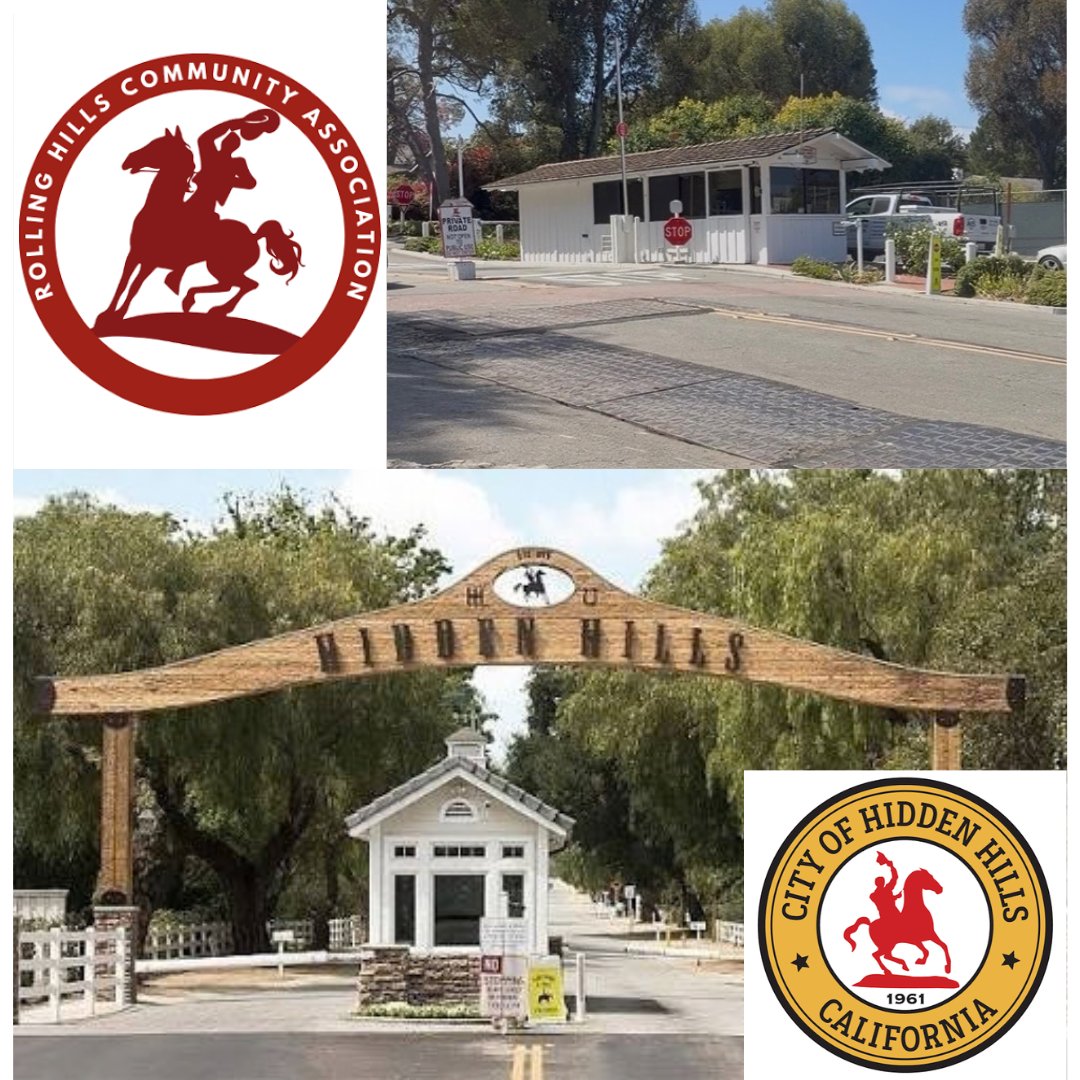
One of the most interesting and little-known facts about Rolling Hills is its connection to another of Southern California's most famous gated equestrian communities: Hidden Hills.
Rolling Hills was developed beginning in the 1930s by landscape architect and developer A.E. Hanson, who envisioned a rural residential community built around large properties, horses, trails, open space and country living.
Then, in 1950, Hanson began developing Hidden Hills in the western San Fernando Valley.
In other words, the same developer responsible for creating Rolling Hills went on to create the community that would eventually become one of the most famous celebrity enclaves in the country.
And the similarities between the two communities are hard to miss.
Both were designed around privacy, large properties, horses, equestrian trails and a rural atmosphere that feels remarkably removed from the surrounding Los Angeles metropolitan area.
Hidden Hills eventually became internationally famous for its celebrity residents and homeowners.
Over the years, people who have owned homes or lived in Hidden Hills have included Kim Kardashian, Kris Jenner, Kylie Jenner, Drake, Justin Bieber, Will Smith and Jada Pinkett Smith, Kevin Durant, Lil Wayne, Miley Cyrus, The Weeknd, Madonna, Ozzy and Sharon Osbourne, Jennifer Lopez and Marc Anthony, Howie Mandel, Beau Bridges, Frankie Avalon and Sinbad, among many others.
The Kardashian-Jenner family's connection to the community particularly helped put Hidden Hills on the international map.
But long before Hidden Hills became synonymous with celebrities, Hanson had already begun creating this distinctive type of equestrian community here on the Palos Verdes Peninsula.
That's one of my favorite pieces of Rolling Hills history.
When people see Hidden Hills today, they often associate it with celebrities, privacy, gated estates, horses and large properties.
What many people don't realize is that Rolling Hills came first.
The same developer was creating that rural, equestrian lifestyle in Rolling Hills years before he began developing Hidden Hills.
And nearly a century later, much of Hanson's original vision is still visible here.
The gates, large properties, white ranch-style homes, horses, miles of trails and extraordinary sense of open space aren't simply characteristics that developed accidentally over time. They are part of what Rolling Hills was intended to be from its earliest days.
As both a Rolling Hills resident and a Realtor who has bought, built, remodeled and sold homes within the gates, I think that history helps explain something that's difficult to appreciate from an online listing:
Rolling Hills isn't simply a neighborhood of expensive homes. It's a lifestyle that was deliberately designed to feel different from the rest of Los Angeles.
Rolling Hills is a private, gated city located on the Palos Verdes Peninsula in Los Angeles County. It is surrounded by other Palos Verdes communities but has a distinctly rural, equestrian character with large properties, open space and extensive riding trails.
Yes. Rolling Hills is a private, gated residential community with controlled access. There are multiple gated entrances, and visitors generally need authorization from a resident to enter.
The gates and limited through-traffic are a major part of what gives Rolling Hills its unusual sense of privacy and seclusion.
Yes. Rolling Hills was developed as an equestrian community, and horses remain an important part of its character.
Many properties have barns, corrals, turnouts, riding areas or room for equestrian improvements, depending on the property and applicable requirements. The community also has an extensive network of riding trails.
As a Rolling Hills resident and horse owner myself, this is one of the areas where I particularly enjoy helping buyers. A property that looks perfect on paper isn't necessarily the best horse property. Usable land, access, topography, trailer access, barn placement and trail access can matter tremendously.
No. Although Rolling Hills is an equestrian community, individual properties vary considerably.
Some have elaborate equestrian facilities, while others may have older facilities, minimal improvements or simply the land and potential to create them. Buyers interested in keeping horses should evaluate the property itself rather than assuming acreage automatically makes it suitable for their needs. Like Hidden Hills, all properties must leave space for horses on their lot.
Rolling Hills is known for its low-profile, predominantly single-story ranch architecture, which is an important part of the community's character. Rolling Hills does allow basements including one home that features a subterranean professional tennis court.
Buyers considering construction or major remodeling should always investigate the current City of Rolling Hills development standards, HOA requirements and property-specific restrictions before assuming that a particular design can be built.
The white ranch-style home has become one of the visual signatures of Rolling Hills and contributes to the cohesive rural character of the community. The city does allow "California Ranchos" and a "Modern Ranch" house.
Architectural and exterior requirements are an important consideration for anyone planning to remodel, expand or build within Rolling Hills, so current requirements should be verified before beginning a project.
Rolling Hills is known for unusually large residential lots by Los Angeles standards, but acreage can be misleading. The largest parcel currently available is three continuous acres totally 60 acres.
Two properties with similar lot sizes can feel completely different because of slope, usable land, views, privacy, location and configuration.
When evaluating Rolling Hills real estate, I pay as much attention to usable acreage as I do to the number of acres shown on paper.
Yes. The Rolling Hills Community Association plays an important role in maintaining the private roads, gates, trails and community standards that help preserve Rolling Hills' character.
Buyers should review current dues, rules, architectural requirements and other governing documents as part of their due diligence.
Yes. The trail system is one of the defining features of Rolling Hills. Rolling Hills features over 30 miles of riding and hiking trails although no motor vehicles are allowed on them.
Horses and riders are still a normal part of everyday life here, which is remarkable considering Rolling Hills is located within Los Angeles County.
Some Rolling Hills homes have spectacular ocean views, while others offer city-light, coastline, harbor, mountain or Los Angeles basin views.
View quality can vary dramatically from property to property, even on the same street. Orientation, elevation and neighboring properties can all make a difference.
No. Rolling Hills and Rolling Hills Estates are separate cities.
Rolling Hills is the private gated community located primarily within the gates, while Rolling Hills Estates is a separate Palos Verdes Peninsula city with numerous neighborhoods and housing styles.
This distinction can be confusing for buyers who are new to Palos Verdes.
Rolling Hills is on the Palos Verdes Peninsula, while Hidden Hills is in the western San Fernando Valley.
What makes their connection fascinating is that both communities were developed by A.E. Hanson.
Hanson developed Rolling Hills first and later began developing Hidden Hills in 1950. Both communities reflect his vision of combining substantial residential properties with privacy, horses, trails and a rural lifestyle within greater Los Angeles.
Hidden Hills later became internationally known for its celebrity homeowners, including members of the Kardashian-Jenner family and numerous entertainers, musicians and athletes.
Privacy is one of Rolling Hills' defining characteristics.
Controlled video monitored and guard gate entrances, large properties, mature landscaping, limited traffic and the community's rural layout can provide a degree of separation that is difficult to find elsewhere in Los Angeles.
However, privacy varies significantly by property, which is another reason location within Rolling Hills matters.
Rolling Hills is one of those communities where price per square foot only tells part of the story.
Usable acreage, views, privacy, topography, location within the gates, condition, architecture, equestrian facilities, remodeling potential and even how a home sits on its property can materially affect desirability.
That's why two homes with similar square footage and acreage can sell for very different prices.
Beyond the house itself, I recommend paying close attention to usable land, topography, privacy, views, access, orientation, remodeling potential and any equestrian facilities.
For horse owners, there are additional considerations: barn and turnout configuration, trailer access, riding areas and access to the trail system.
Rolling Hills is a community where understanding the property can be just as important as understanding the house.
Do your homework before assuming that what you envision can be built.
Rolling Hills has development and architectural requirements designed to preserve the community's character. Topography, building pads, setbacks and other property-specific conditions can also affect what's possible.
For buyers considering a major remodel or new construction, understanding those limitations before purchasing can be extremely important.
For me, the remarkable thing about Rolling Hills is how removed it can feel from Los Angeles.
You can walk or ride a horse along a trail, see horses in neighboring properties and come home to substantial acreage and open space—yet you're still on the Palos Verdes Peninsula and close to the rest of the South Bay.
That's difficult to convey through listing photos or an automated home search.
It's also why I tell buyers that you don't really understand Rolling Hills until you spend some time inside the gates.
I live in Rolling Hills, own horses here, and have bought, built, remodeled and sold homes within the community. If you're considering buying or selling in Rolling Hills—or simply have a question about a particular property—I'm happy to help.
Suzanne Dyer
Strand Hill | Forbes Global Properties
CA BRE #01054310
310-528-7480
www.suzannedyer.com
If you´re listing or selling real estate in the Palos Verdes Peninsula and surrounding areas, put a winning real estate professional to work for you.
Let's Connect